Smart Contracts in Blockchain Technology: Development, Security & Best Practices

Smart contracts have become one of the most transformative innovations in blockchain technology, changing how digital agreements are created, executed, and enforced. Instead of relying on intermediaries or manual processes, smart contracts allow logic, rules, and outcomes to be encoded directly into software that runs autonomously once predefined conditions are met.
This shift is not just technical. It affects how businesses build trust, reduce costs, and scale digital products globally. However, developing secure and reliable smart contracts requires more than writing code. It demands a strong understanding of decentralized systems, security threats, and long term maintenance strategies.
This guide is designed to help founders, product leaders, and developers understand smart contracts from the ground up.
What Are Smart Contracts and Why They Matter in Blockchain Technology
Smart contracts are self executing programs that live on a blockchain and automatically enforce agreements once conditions are met. Unlike traditional contracts, they do not require human intervention to validate or execute terms.
At their core, smart contracts perform three key functions:
They store rules and logic in immutable code
They monitor inputs and conditions on the network
They trigger actions such as transferring assets or updating records
In blockchain technology, this automation eliminates the need for centralized authorities while increasing transparency and auditability. Every transaction is verifiable, time stamped, and resistant to tampering.
Real World Applications of Smart Contracts
Smart contracts are already powering a wide range of applications across industries:
Decentralized finance platforms for lending, borrowing, and trading
NFT marketplaces handling ownership and royalties
Supply chain systems for tracking provenance
Identity verification and access control
Gaming economies and digital assets
Each of these use cases depends on precise logic and secure execution. A small error in a smart contract can result in irreversible financial losses, which is why development discipline is critical.
How Smart Contracts Are Developed in Blockchain Technology Systems
Developing smart contracts requires a structured process that balances functionality, security, and efficiency. Unlike traditional applications, smart contracts cannot be easily patched once deployed, which makes planning essential.
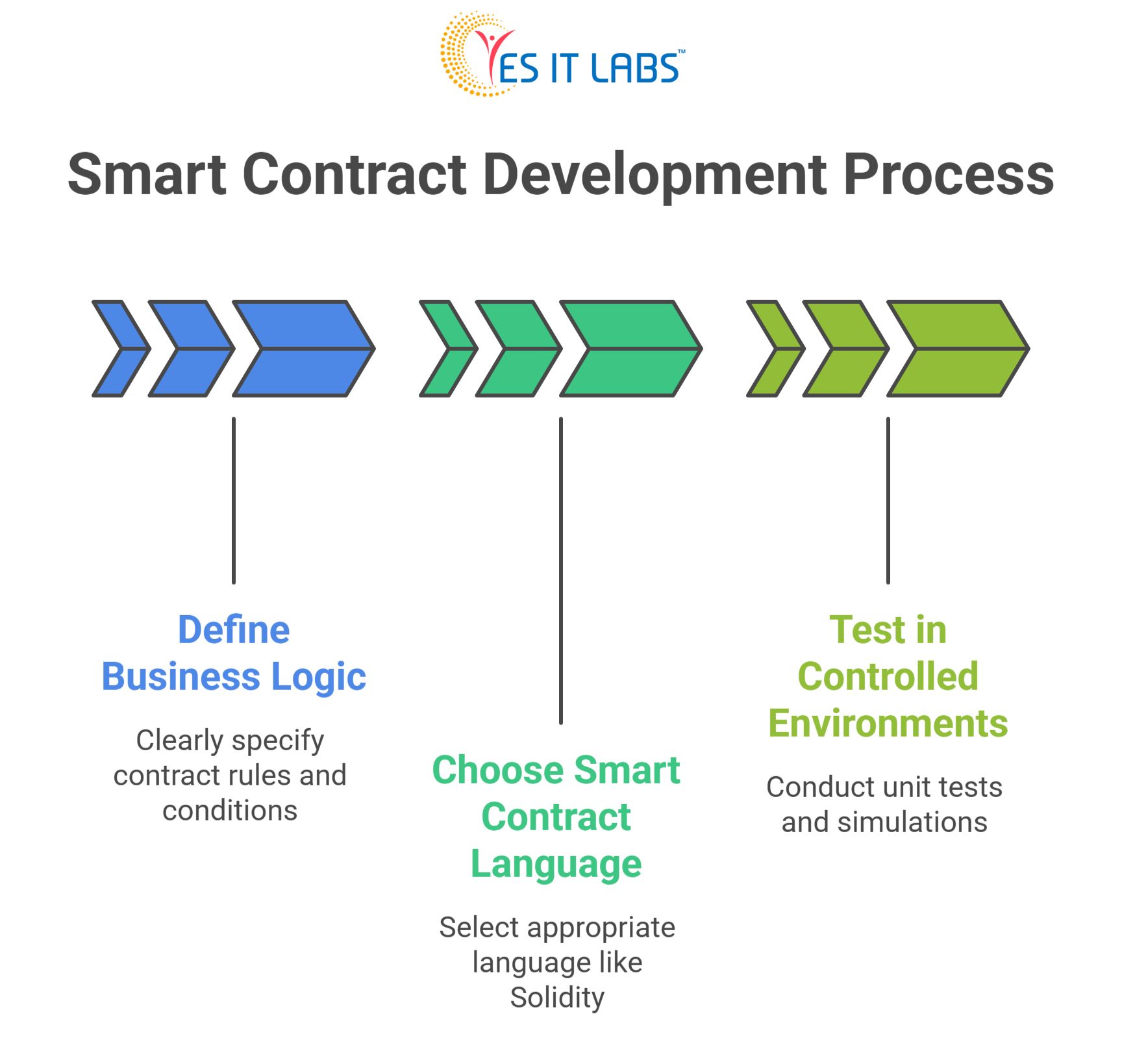
Step 1: Defining Business Logic Clearly
Every successful smart contract begins with a clear specification. Developers must translate real world rules into deterministic logic that leaves no room for ambiguity.
Questions to resolve early include:
What conditions trigger execution
What assets or data are involved
What happens if conditions fail
Who can interact with the contract
Clarity at this stage reduces costly redesigns later.
Step 2: Choosing the Right Smart Contract Language
Most smart contracts today are written in Solidity, although other languages like Vyper and Rust are also used depending on the blockchain.
Solidity is widely adopted because it integrates well with popular development tools and ecosystems. Developers often use JavaScript based frameworks such as Hardhat or Truffle for testing and deployment. In these scenarios, companies often decide to hire JavaScript developer talent with Web3 experience to bridge smart contracts with user facing applications.
Step 3: Testing in Controlled Environments
Before deployment, contracts must be tested extensively using local and public test networks. Testing should include:
Unit tests for every function
Edge case simulations
Failure scenarios
Gas consumption analysis
Testing ensures that the contract behaves exactly as intended under all possible conditions.
Security Risks in Smart Contracts and How to Prevent Them
Security is the most critical aspect of smart contract development. Once deployed, smart contracts are immutable, meaning vulnerabilities can be exploited permanently.
Common Smart Contract Vulnerabilities
Some of the most frequent security risks include:
Reentrancy attacks that exploit recursive calls
Integer overflows and underflows
Improper access control
Unchecked external calls
Logic flaws in condition handling
These issues have led to major financial losses across decentralized platforms.
Best Practices for Secure Smart Contract Development
To mitigate risks, teams should follow strict security principles:
Use established libraries instead of custom implementations
Apply the principle of least privilege
Validate all external inputs
Separate contract responsibilities
Include emergency pause mechanisms
Backend infrastructure also plays a role in security. Many decentralized applications rely on off chain services for monitoring, indexing, or automation. In such cases, teams often hire node.js developer professionals to manage secure backend logic that interacts safely with smart contracts.
Infrastructure, Deployment, and Scalability Considerations
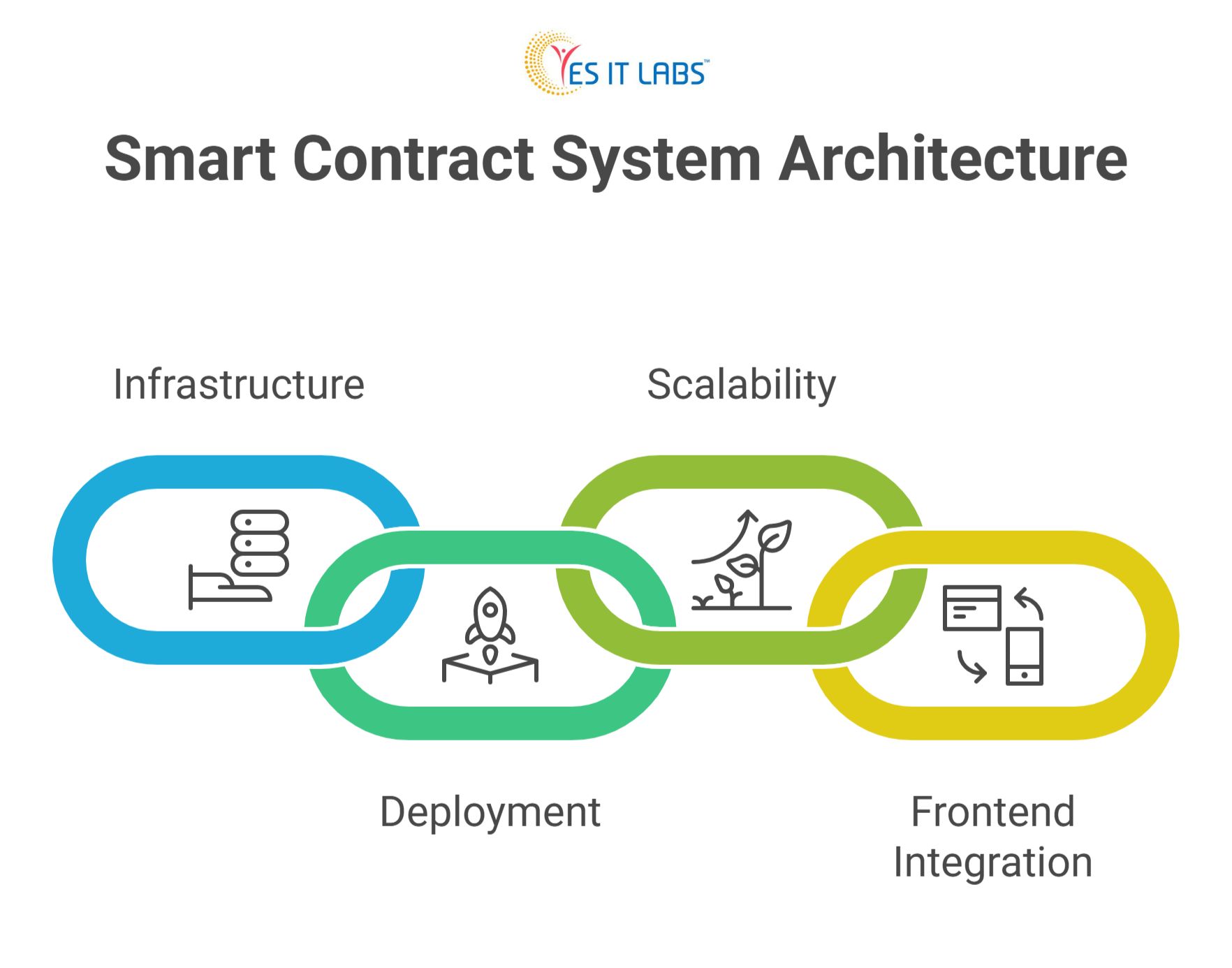
Smart contracts do not exist in isolation. They are part of a broader system that includes user interfaces, backend services, and infrastructure layers.
Hosting and Deployment Strategies
While smart contracts themselves live on the blockchain, surrounding services such as APIs, monitoring tools, and analytics dashboards require reliable infrastructure. Cloud platforms are commonly used to support these components, and organizations frequently hire AWS developers to design scalable environments that support high availability and security.
Key infrastructure considerations include:
Secure key management
Node reliability
Monitoring transaction failures
Managing upgrades and migrations
Frontend Integration for User Interaction
Users interact with smart contracts through web interfaces that connect wallets and display transaction data. These interfaces must be intuitive, responsive, and secure. Development teams often hire html5 developers to create user friendly frontends that integrate seamlessly with blockchain wallets and decentralized applications.
A strong frontend experience improves adoption and reduces user errors that could lead to lost funds.
Best Practices for Long Term Smart Contract Maintenance
Although smart contracts are immutable, systems built around them must evolve over time. Planning for long term maintenance is essential.
Versioning and Upgrade Patterns
Developers commonly use proxy patterns to enable upgrades without breaking existing data. These patterns allow logic to be updated while preserving contract state.
Key recommendations include:
Documenting every contract version
Maintaining backward compatibility
Communicating changes clearly to users
Documentation and Transparency
Clear documentation builds trust and improves usability. It should explain:
Contract purpose and scope
Function behavior
Security assumptions
Known limitations
Transparent documentation also supports compliance and auditing efforts.
Conclusion
Smart contracts represent a powerful evolution in how digital agreements are created and enforced. When implemented correctly, they offer transparency, efficiency, and reliability at a global scale. However, success depends on disciplined development, rigorous security practices, and thoughtful system design.
By following proven best practices and understanding the broader ecosystem around blockchain technology, organizations can build smart contract solutions that are secure, scalable, and ready for real world adoption.